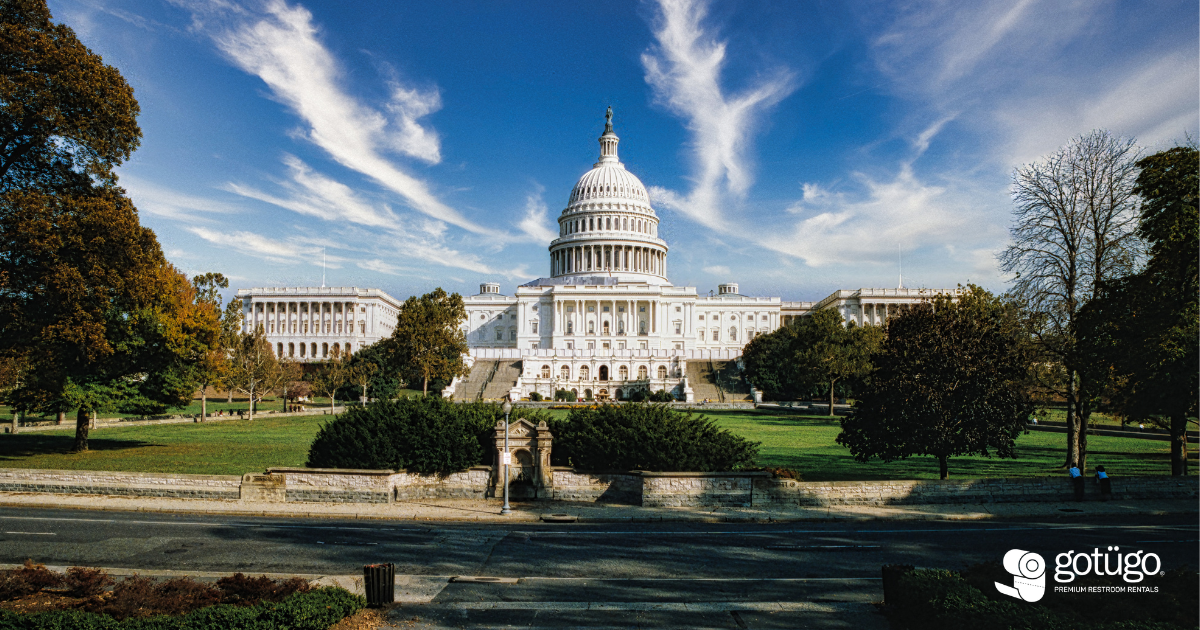
Picture it: a high-profile corporate reception in the shadow of the Capitol. The tent is up, the catering is confirmed, and the guest list includes elected officials, agency heads, and executives from three time zones. Every element of the event has been reviewed for security compliance. Every element except one.
The sanitation vendor pulls up to the venue entrance and does not have the documentation required to clear the checkpoint. The units never make it to the site. The event runs without adequate facilities, and the planner spends the next two hours managing a situation that should not have happened.
Washington DC is the most demanding event market in the country. The security requirements are real, the jurisdictional complexity is unmatched, and the margin for vendor error is smaller than anywhere else in the DMV. For event professionals working in the District, every vendor in their lineup needs to have done this before.
No other city in the country concentrates so many overlapping agencies and security protocols in a single event market. Understanding that landscape is the baseline for working in it effectively.
A single event in the District can fall under the authority of the Metropolitan Police Department, the US Capitol Police, the US Secret Service, and the National Park Service simultaneously, depending on the venue and the guest profile.
According to the DC special events guide published by DC's Mayor's Special Events Task Group, events on public space require interagency coordination across multiple city and federal bodies before a single permit is issued. For planners new to the District, this coordination is often the first surprise.
National Mall events fall under the National Park Service. Events on Capitol grounds require permits from the Architect of the Capitol and coordination with the US Capitol Police.
Private venue events near federal properties may still require security review if the guest list triggers Secret Service involvement. The permitting timeline for medium to large events starts at 90 to 120 days out. High-security events involving senior government officials require six to nine months of advance planning.
The highest-tier events in the District carry a formal federal designation: the National Special Security Event, or NSSE. These events, which include presidential inaugurations, major state functions, and large-scale national commemorations, operate under a unified security command that includes the Secret Service as the lead agency.
Vendor access to NSSE venues is controlled at a different level than standard event permitting. Equipment screening, advance vehicle registration, and credentialing requirements apply across every supplier category.
For a sanitation vendor to operate at an NSSE, the relationship, the documentation, and the clearance process need to be established well before the event day arrives. gotügo has served events at this level, including White House events, and brings that operational familiarity to every DC engagement.

Washington DC events serve a guest profile found nowhere else in the event industry. Cabinet members, foreign dignitaries, senior executives, and elected officials are the expected attendees at major DC functions, not the exception. The experience standard those guests expect matches the setting.
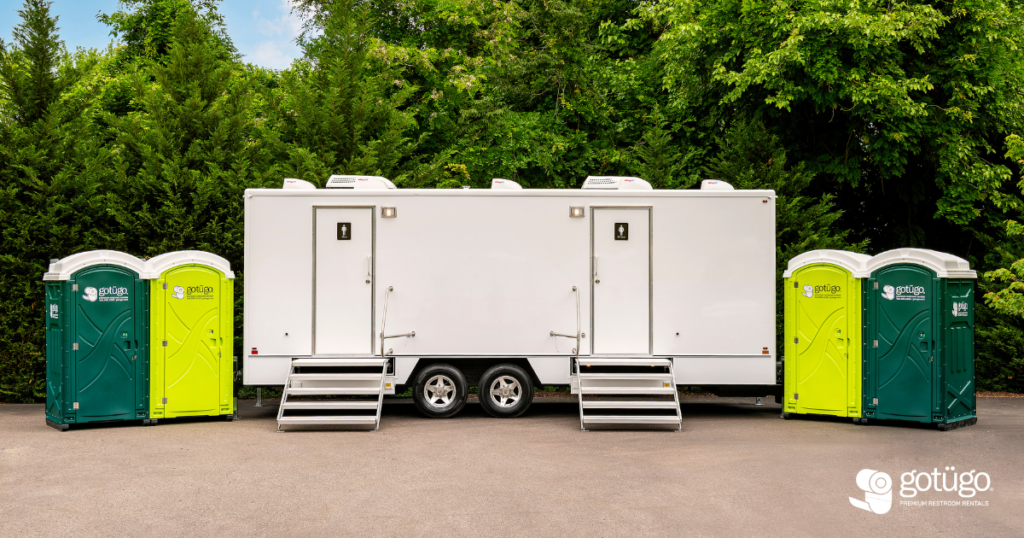
A standard portable unit has no place at a white-tie dinner, a diplomatic reception, or a congressional fundraiser. For high-profile DC events, gotügo's luxury restroom trailers are the only sanitation option that meets the aesthetic expectations of the venue and the guest. Climate-controlled interiors, stainless steel fixtures, hardwood floors, and private men's and women's sections are not amenities at this level of event. They are the baseline.
The facilities also need to be positioned discreetly. At events where sight lines and access routes are controlled for security reasons, placement cannot be an afterthought. The unit goes where the security plan allows and where guests can find it without it disrupting the visual flow of the event. Getting that balance right requires working with a partner who has handled these constraints before.
Major public gatherings on the National Mall, large-scale corporate events, and high-attendance federal commemorations generate the kind of guest density that exposes inadequate sanitation planning quickly.
When facilities are undersized for the crowd, lines form. The experience deteriorates. And the event planner, not the sanitation vendor, is the one who hears about it afterward.
gotügo's capacity planning accounts for peak attendance windows, event duration, and the service frequency required to maintain facility quality throughout a multi-hour event. That planning happens before the event, not during it.
The DC event community is small, well-connected, and has a long memory. A single logistics failure at a high-profile function travels quickly through the network of planners, venue managers, and corporate clients who make up the market.
When something goes wrong at a DC event, the conversation does not start with the vendor. It starts with the planner who selected them. Every supplier in a DC lineup represents a professional decision, and that decision is evaluated in hindsight when something does not perform.
A sanitation vendor that cannot clear a security checkpoint, that misses a delivery window on a controlled-access venue, or that places units without coordinating with the security team creates a problem that the planner absorbs. In a market where relationships and reputation drive repeat business, that kind of problem has a longer tail than one event.
DC events at major venues and federal properties frequently require advance documentation from all vendors, including insurance certificates, vehicle registration, driver identification, and in some cases, background check clearance for personnel who will access controlled areas.
A vendor that does not know this requirement exists, or that cannot meet it on the timeline the permitting process demands, is not a viable option for serious DC work.
gotügo's operational team is familiar with the documentation requirements across the District's major venue categories. That familiarity reduces the coordination burden on the planner and eliminates the risk of a vendor clearance issue surfacing too close to the event date to resolve.

Building gotügo into a DC event plan requires earlier engagement than most other markets. Here is the framework:
The sanitation conversation belongs at the same table as the security planning conversation. Knowing early whether the venue requires vendor credentialing, vehicle screening, or advance documentation for personnel means those requirements can be built into the gotügo onboarding timeline rather than surfacing as a late-stage complication.
Facility capacity and placement at DC events is not purely a logistics decision. It is governed by the security footprint. Vendor equipment may be restricted from certain site areas, placement may need to avoid security perimeters or sight lines, and access routes for service vehicles may be limited to specific windows.
The National Park Service permits for National Mall events, for example, include specific requirements for vendor placement and access that affect every supplier on the event. Building those constraints into the sanitation plan from the start prevents the conflict between what the logistics team wants and what the security team allows.
At controlled-access venues, gotügo service teams operate within access windows that are set by the security plan, not by standard service scheduling. Multi-day events on federally managed properties require advance scheduling for every service entry. That scheduling needs to be coordinated between the gotügo operations team and the event security coordinator before the event begins, not managed reactively on the day.
Events in the District carry a visibility and a consequence that events in most other markets do not. When the guest list includes officials from the executive branch, when the venue is steps from the Capitol, when the function is being covered and scrutinized at every level, every supplier is performing in front of an audience that notices when something falls short.
gotügo has been serving Washington DC events since 1980. The operational knowledge of how the District's event market works, from permit coordination to security clearance to placement under controlled access conditions, is part of what we bring to every engagement.
For event professionals planning work in the District, that experience is not a differentiator. It is a requirement. Explore our DC event solutions or reach out to discuss your specific event requirements.
You've handled every other detail. Don't leave this one to chance.
Connect with gotügo to request a quote or explore options for your next DC event. Proudly serving Maryland, Washington DC, and Northern Virginia since 1980.

Stop settling for standard units that create bottlenecks, waste worker time, and risk compliance violations. Transform your site efficiency with strategically placed and maintained premium facilities to drive productivity.
Our team works directly with project managers to optimize every aspect of your restroom service—from initial placement through project completion.