
Picture it: a Category 1 hurricane makes landfall along the mid-Atlantic coast late on a Thursday night. By Friday morning, flooding has rendered critical infrastructure unusable across three jurisdictions simultaneously.
Emergency operations centers are active in Montgomery County, Arlington, and the District. FEMA coordinates from a command post near the Virginia-Maryland line. First responders are staged across all three areas, and displaced residents are being directed to shelters from Bethesda to Alexandria.
The call for portable sanitation goes out. The vendor on the existing contract serves Maryland only. The Virginia deployment goes to a second contractor who has never worked alongside the primary. The DC activation requires a third coordination chain. By the time units arrive at two of the three sites, the first responders at the third site have been without facilities for six hours.
This is not a hypothetical failure mode. It is the operational reality that emergency managers across the DMV have faced when their sanitation vendors were not structured for multi-state rapid response. For municipal crises that do not respect state lines, the contractor needs to operate across all of them.
The Washington DC metro area is one of the most logistically complex emergency management environments in the country. Maryland, Virginia, and the District of Columbia operate under different state and local codes, different procurement frameworks, and different emergency management chains of command. When a crisis hits the region, those differences do not disappear. They compound.
Under the Emergency Management Assistance Compact (EMAC), states can request and provide resources across state lines during declared emergencies. But the logistics of coordinating multiple vendors across multiple jurisdictions while managing a live crisis introduces delays that effective pre-planning eliminates.
According to FEMA's disaster declaration guidance, emergency managers are expected to identify and pre-qualify vendors across every critical infrastructure category before a disaster occurs, not during one. Sanitation is on that list.
For emergency planners across Howard, Montgomery, Prince George's, Arlington, and Fairfax counties as well as the District, a single sanitation vendor with established operations across all three jurisdictions removes a coordination layer that costs time during a live crisis, time that does not exist.
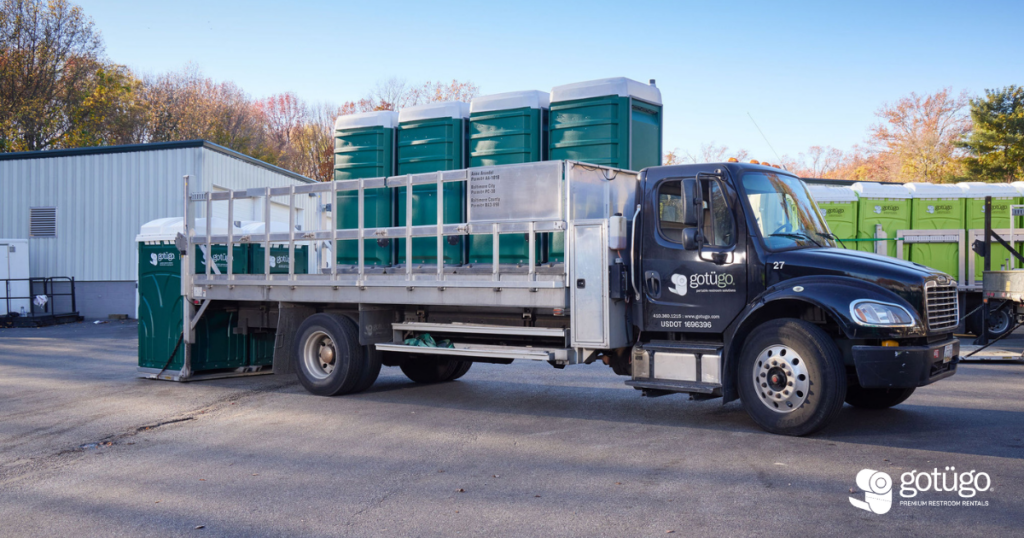
gotügo has been operating across Maryland, Washington DC, and Northern Virginia since 1980. That footprint is not incidental. It represents 40 years of established relationships with municipal clients, familiarity with the logistics infrastructure of each jurisdiction, and the operational capacity to deploy simultaneously across all three without standing up new vendor relationships during an active emergency.
When Montgomery County activates and Arlington County activates and DC activates within the same 12-hour window, a single call to gotügo coordinates all three deployments. One logistics chain. One accountability structure. No gaps in the handoff between jurisdictions.
Sanitation in disaster relief is not the same product as sanitation at a county fair. The operational requirements are different, the compliance expectations are different, and the consequences of failure are different. Emergency managers who treat it as a commodity purchase discover that difference when it matters most.
Federal disaster response sites, FEMA staging areas, and federally supported shelters operate under ADA compliance requirements that apply to every temporary facility on the site, including portable sanitation.
ADA-compliant accessible units with proper approaches, turning radius clearance, and compliant fixture heights are not optional at a federal site. They are a contractual requirement. A vendor who cannot supply compliant units at scale does not belong on a federal emergency contract.
gotügo's fleet includes ADA-compliant portable restroom trailers sized for emergency deployment. For extended operations at shelter sites or first responder staging areas, climate-controlled units maintain the facility standard required for operations running 24 hours across multiple days.
A two-hour event and a 10-day disaster relief operation are not the same operational context. For extended deployments at shelter sites, command posts, and responder staging areas, climate-controlled restroom trailers are a public health and operational requirement, not a premium add-on. First responders working 12-hour shifts at a staging area in July or January need facilities that function at temperature. Displaced residents sheltering in place need the same.
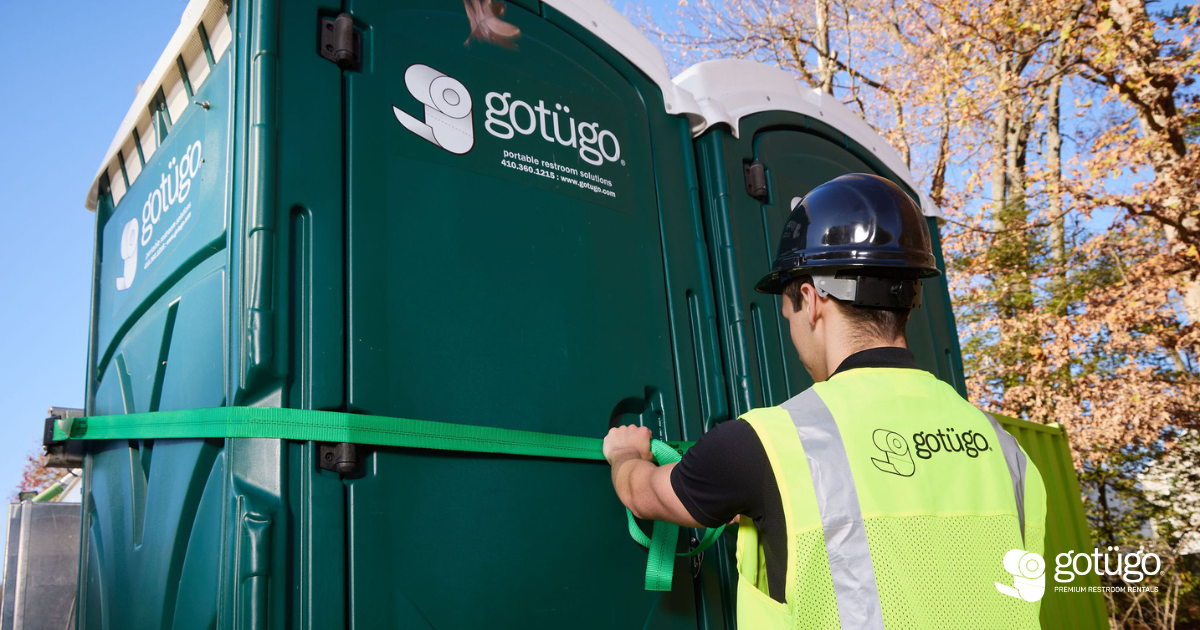
gotügo's premium trailer fleet is climate-controlled, ADA-accessible, and configured for the extended service cycles that disaster relief deployments require. Units are serviced on schedules determined by occupancy volume and deployment length, not by the standard residential rental cadence.
A municipal crisis that requires 20 units on day one may require 80 units on day three as the scope of displacement becomes clear. A vendor whose total fleet capacity is 40 units cannot scale with a developing emergency. When an emergency escalates on day three, the last thing an emergency manager needs is a vendor calling to say they are tapping subcontractors. gotügo's fleet depth handles rapid scaling across a developing deployment from within its own resources.
Emergency management professionals carry significant accountability for the decisions they make before a crisis, not just during one. Vendor selection is part of that pre-crisis decision record. When a sanitation gap during a relief operation becomes a public health incident, the question asked by oversight bodies and the press is not which vendor failed. It is which emergency manager approved that vendor.
Pre-qualified vendors with established contracts that can be activated under emergency procurement rules eliminate the delay of competitive bidding during a live crisis. Emergency managers working with gotügo can structure pre-event agreements that allow rapid activation without a new procurement cycle. That preparation is the difference between a 6 AM call that gets units on site by noon and a 6 AM call that triggers a procurement review.
The visible failure in emergency sanitation is not the first day without facilities. It is day four when a vendor who was not structured for extended deployment falls behind on service cycles. Units that were adequate at initial deployment become inadequate when service intervals are missed. Missed service cycles on day four turn an adequate sanitation deployment into a public health problem.
gotügo's emergency deployment protocols establish service schedules at the outset of each deployment based on expected occupancy and duration. Those schedules are maintained with the same discipline as the initial deployment. Emergency managers know what to expect on day one and on day ten.
Confirm that your sanitation vendor holds active operating authority across every jurisdiction in your mutual aid network. A vendor licensed in Maryland but not Virginia cannot legally operate a deployment across the state line without additional contracting. Pre-qualifying a vendor who covers the full DMV footprint eliminates that gap before it becomes a crisis-day problem.
Initial deployment size is almost never the final deployment size in a developing municipal crisis. Verify that your vendor can scale to at least three times the initial deployment volume within 24 to 48 hours of an escalation request. If the answer is uncertain, that vendor is not the right choice for a regional emergency contract.
If any portion of your deployment will occur on a federally supported site, confirm ADA compliance capabilities explicitly in the vendor contract. Do not rely on general representations. Specify unit types, approach clearances, and service requirements in the agreement.
Establish service intervals in writing before the first unit is deployed. Extended emergency deployments require different service cadences than standard rental agreements. Define the service schedule, the escalation protocol when occupancy exceeds projections, and the accountability structure for service verification.
For a multi-jurisdiction deployment, the logistics coordination should run through a single contact on the vendor side with authority across all deployment sites. Fragmented vendor coordination during a live crisis is a documented failure mode. Confirm the coordination structure before activation.
Municipal crises in the DMV do not ask for permission before crossing state lines. The logistics infrastructure that supports emergency response should not either.
gotügo has been a reliable partner to municipal clients across Maryland, Washington DC, and Northern Virginia for over 40 years.
Our fleet capacity, regional footprint, ADA-compliant units, and established relationships with emergency management clients across all three jurisdictions make us the sanitation partner built for multi-jurisdiction, rapid-response, extended-duration deployments.
Explore our emergency response capabilities or reach out to discuss pre-event contracting and rapid response agreements.
You've handled every other detail. Don't leave this one to chance.
Connect with gotügo to request a quote or discuss emergency deployment planning. Proudly serving Maryland, Washington DC, and Northern Virginia since 1980.

Stop settling for standard units that create bottlenecks, waste worker time, and risk compliance violations. Transform your site efficiency with strategically placed and maintained premium facilities to drive productivity.
Our team works directly with project managers to optimize every aspect of your restroom service—from initial placement through project completion.